ReWild to Welcome 20 Community Garden Grant Recipients in 2026
Long Island, NY – [February 6, 2026] – ReWild Long Island is thrilled to unveil the 20 new recipients of its Community Gardens Program grants for 2026. Now in its fourth consecutive year, this initiative works with local community groups to transform public spaces across Long Island into vibrant, ecologically-rich native plant gardens. This new round of recipients brings the total number of ReWild Community Gardens to 74.
Empowering Communities, Nurturing Nature
This year’s diverse group of recipients includes community spaces, schools, churches, and libraries across Long Island. Each collaboration represents a commitment to learning and working together to enhance beauty and biodiversity through native plants.
“We’re incredibly excited about the enthusiasm and dedication we’ve seen from our partners,” says Samantha Jo, ReWild Gardens Project Manager. “These gardens will not only beautify our neighborhoods but also serve as habitats for local pollinators and living classrooms for community members of all ages.”
What the Grant Offers
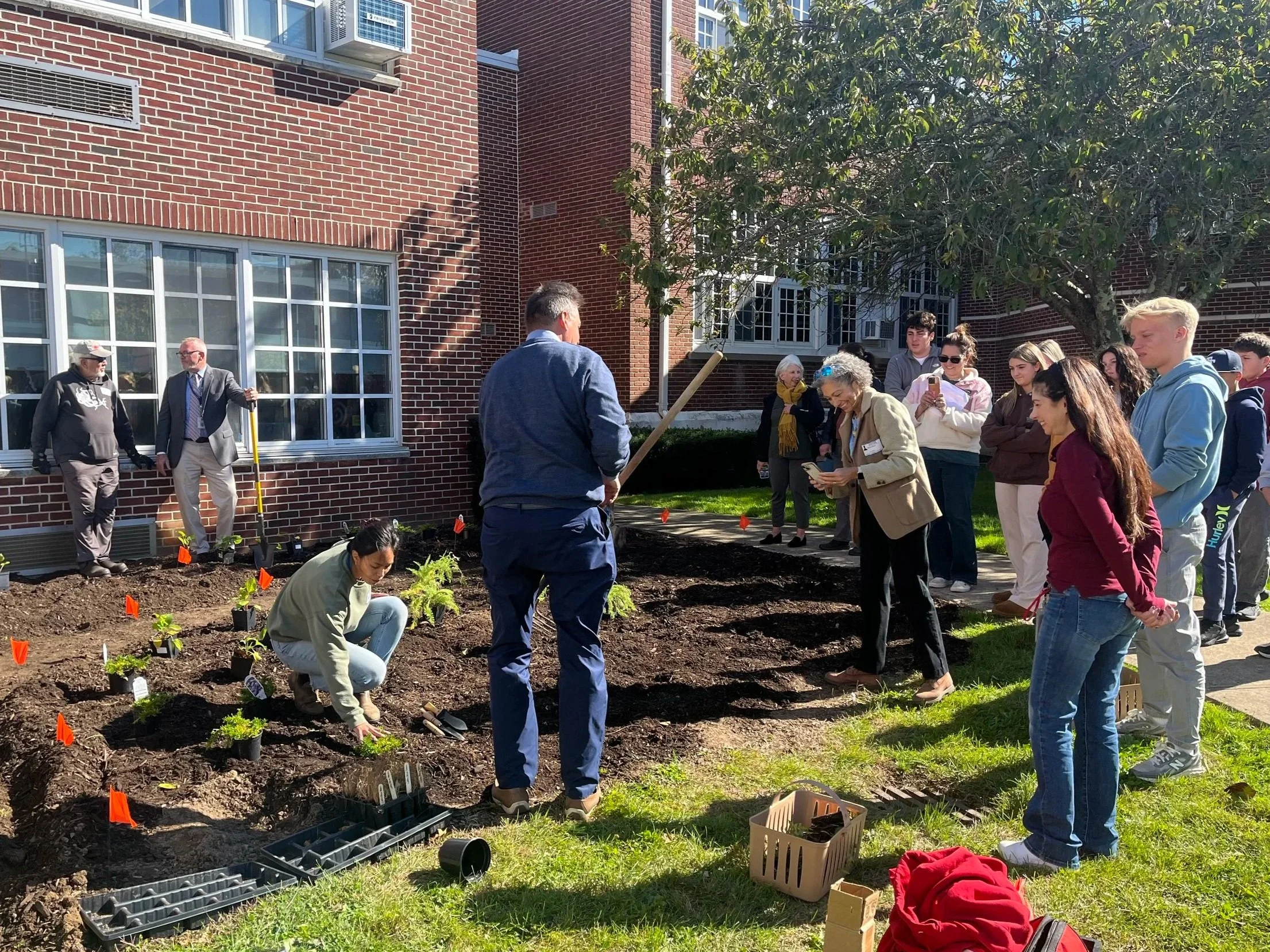
Planting day at Mattituck HS, 2025 Community Gardens Recipient
The Community Gardens Program grant provides recipients with a comprehensive package of benefits. These benefits include professional garden design, aid with installation, free native plants, irrigation systems, educational signage, on-site maintenance help, and expert maintenance training, as well as access to an online group of Community Gardens recipients and ReWild sustainable garden experts that share resources and knowledge.
Recipients also have the option of participating in a 7-week online workshop to learn about sustainable garden design, with the goal of collaborating with their team to create the design for their garden.
In exchange for these valuable resources, community groups commit to maintaining their new gardens on a weekly basis for at least two years and hosting two classes open to the community over the two year partnership.
Community Impact
The native gardens that our Community Gardens Program provides are more than just beautiful spaces. They are centers for education, community engagement, and ecological restoration. From supporting local pollinators to providing hands-on learning experiences for students, each garden plays a crucial role in fostering a deeper connection between people and nature.
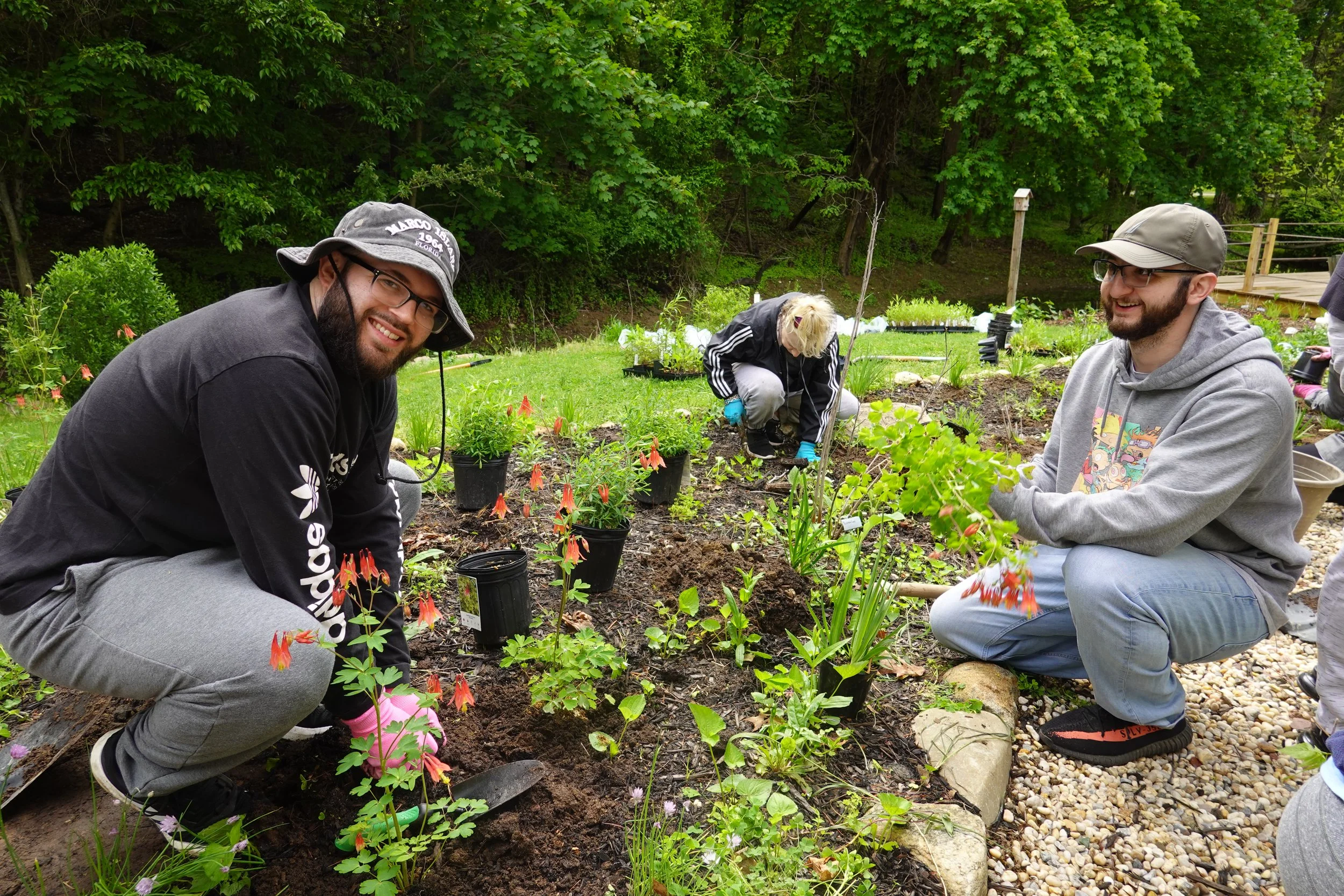
Planting Day at Three Village Historical Society, 2025 Community Gardens Recipient
Empowering Communities Through Education and Collaboration
As in 2025, six of this year’s garden recipients will learn how to design and implement their own native plant garden with ReWild’s Sustainable Garden Design Virtual Workshop. Through lessons and labs led by professionals, recipients will be equipped with the foundational knowledge they need to apply sustainable landscaping techniques with confidence, wrapping up the 7-week semester with presentations of their final garden designs. At ReWild, we feel it is important to have our community garden recipients take away a real sense of ownership over their space. And by empowering individuals to feel knowledgeable about the plants and ecology of their garden, we can feel confident that they will go on to educate and inspire others in their community as well.
Looking Ahead
From application interviews to planting day, ReWild’s Community Garden Program is designed to prioritize the long-term success of all its gardens. As the program continues into its fourth year and onward, we aim to maintain a real community; encouraging recipients to discuss their experiences with one another through group messages or even events. While official partnerships are officially two-years long, as we have found this to be sufficient time to let gardens establish themselves, our doors are never truly closed.
We are excited to see how this program continues to transform the landscape and hearts of Long Island. Our community gardens have continually shown us how caring for one another is often synonymous with taking care of our environment, and whether it be our first or seventy-fourth garden, each of these spaces have the capacity to be “seeds of change in our communities,” as explained by our Program Manager, Samantha Jo. We are all capable of making a difference and becoming better stewards to our homes, and the enthusiasm we have seen for this garden program has proven that. So if you can, we highly encourage our ReWilding community to see first-hand the hard work and care put into any one of these spaces.
To learn more about grant recipients from previous years and where to find them, please visit our website at ReWildLongIsland.org/gardens. Likewise, if you would like to lend a hand to nature and ReWild’s other various initiatives, such as our Summer Program which provides internships to local high school students, please visit our website at ReWildLongIsland.org!
A Heartfelt Thank You
Without the generous grants and support of our funders, these gardens would not have been possible. We would like to extend our deepest gratitude to the National Fish and Wildlife Foundation (NFWF), the Community Chest of Port Washington, the New York Pollinator Conservation Fund, The New York Community Trust, the Office of the New York State Attorney General, the Long Island Sound Study (LISS) Sustainable and Resilient Communities Extension, and New Hampshire Audubon (NHA).
Meet our 2026 Community Garden Grant Recipients
Our diverse group of recipients spans across Nassau and Suffolk from the north to the south shore, and all the way out to the North and South Forks of Long Island. Here's a glimpse into the exciting projects:
North & South Nassau
Port Washington Public Library: In line with its efforts to support and promote local sustainability, the library will be introducing a small native garden to support wildlife and public education. Set to be located on their front lawn, this garden will compliment our written understanding of how native plants can support their environment.
Syosset Public Library: After having fallen in love with their certified Monarch Way Station garden, the Syosset Public Library is hoping to invite even more pollinators and library visitors into their space by extending the space with new native plants. This additional garden space will support ongoing environmental education programs, and its goal to spread the word on how our gardening choices may impact our local landscapes.
NYSARC, Inc. (AHRC Nassau County Chapter): Furthering its mission of uplifting individuals with intellectual developmental disabilities, one of NYSARC’s initiatives is to make environmental education accessible to all. As such, their new native plant garden will provide a space to teach environmental stewardship, build valuable skills, and highlight the therapeutic properties of horticulture and the outdoors.
St. Francis Episcopal Church (North Bellmore): Care for creation is imbued in this ministry’s work, with one key example being its produce garden, which is already being used to help tackle local food insecurity. However, this care is not limited to just humans. Through the addition of a native garden space, the church hopes to convey that caring for creation means supporting all of the biodiversity that makes this Earth our home.
The Waldorf School of Garden City: Encouraging curiosity about our natural world is key to helping the next generation of environmental stewards find their passion. This new garden will prove a valuable addition to their biology and gardening program curriculum for students ranging from nursery through high school, allowing for a hands-on learning experience with native plants and pollinators.
Valley Stream Community Garden: ReWild’s newest chapter garden and 2025 grant recipient is returning to the program this year to fully realize its goal of being a center for community and public environmental education. New plants and garden beds will be highlighting the wide breadth of diversity that exists within Long Island, all while giving local community members the tools to care for native plants and implement sustainable landscaping.
Saw Mill Road School (North Bellmore): Ready to expand their native gardening prowess on their campus, this elementary school is hoping to bring a brand new garden space to the front of their main building. With school administration fully behind this rewilding effort, the goal is to make this new feature an interactive experience for students to marvel at and supplement their learning with. Once established, the garden will be a welcome sight not only for all students and staff, but it’s visibility to Saw Mill Road will provide a point of natural interest and inspiration for the neighborhood as a whole.
The Port Washington Estates Association (PWEA): Local homeowners are uniting with a strong interest in beautifying their community and incorporating native plants to transform town traffic islands into natural habitats for ecological restoration. Planting in these highly trafficked areas will help generate interest in native plants throughout the town.
West & Mid Suffolk
Suffolk County Community College (Brentwood): Supporting wildlife and student research alike, a new native garden is the perfect learning space to accent this “green” campus. This space will serve as a front lawn replacement for the Renewable Energy & STEM Center, aptly providing a space for ecological intrigue, a study-break, and bees.
Commack Middle School: This community garden will provide great accompaniment to the school’s dedicated gardening and beekeeping club. With supplemental attention from teachers familiar with life sciences and pollinator ecology, this courtyard haven will be a place to discuss conservation topics and how native biodiversity is vital to building a society that revolves around sustainability.
Lynwood Avenue Elementary School PTA (Farmingville): Replacing traditional lawn with a native pollinator garden to support pollinators and wildlife, while providing invaluable enrichment and education opportunities for the students of Lynwood.
Paumanok Elementary School (Dix Hills): Revamping a neglected courtyard within the school by adding a walk-through native garden for students and faculty to enjoy and use in lessons to learn about biodiversity and pollinators.
South Shore
Irmisch Historical Park (Lindenhurst): This garden in the Village of Lindenhurst will add some wildflower charm and biodiversity to the currently grassy park which houses a historic railway depot and the Old Village Hall Museum. One of the few public ReWild gardens to be added on the south shore, the garden will create an opportunity for south shore residents to help out by volunteering their time to maintain a local native garden.
Gardiner Manor School (Bay Shore): The Gardiner Manor School is partnering with ReWild to make its native plantings more accessible to the wider student body. With a new garden space to be added to the enclosed courtyard on school grounds, teachers and students alike are excited to embrace an outdoor classroom that everyone can enjoy and learn from.
North Fork
Floyd Memorial Library (Greenport): After starting a pollinator garden as part of a larger outdoor renovation, Floyd Memorial Library wants to expand their reach by adding new native pollinator plants and berry producing shrubs for the birds. This garden will be a valuable learning space for library events and will add more pollen sources for the mason bee population that the staff are cultivating habitat for.
North Fork Environmental Council (Mattituck): A long-time ally of ReWild, the NFEC will enhance our partnership by showcasing a native plant garden in front of the NFEC office. This garden will educate and inspire the local community about the benefits of native species and will further their mission of environmental protection.
The Butterfly Effect Project (Riverhead): This native pollinator garden will serve as an addition to BEP's existing Intergenerational Community Garden. The new garden will enhance the program’s mission to deepen participants’ relationships with their local environment, educate them not only about local ecosystems but also the threats to them, instill in them healthy and sustainable eating habits, introduce them to the array of careers in environmental and agricultural science and sustainability, and develop the youth into the next generation of environmental scientists, stewards, and farmers.
Town of Southold Conservation Advisory Council (Southold): Establishing a native plant garden on very visible Town property will both demonstrate the value of native gardens as well as set an example for the community. The garden will educate the community on the ability of native plants to improve soil health, reduce stormwater runoff, protect our aquifer, and support pollinators and local wildlife, creating a more resilient and biodiverse environment.
South Fork
Local TV, Inc. / LTV East Hampton: This local media outlet plans to enhance the biodiversity of the pine forest surrounding their office with a native pollinator garden. Having a space dedicated to local flora will not only create a better atmosphere for the community as they attend our events or use their services, but also directly serve their local community by taking part in supporting the environment.
St. Michael's Housing Associates LP (Amagansett): A self-sustaining meadow garden in front of the this senior living community will provide valuable green space and wildlife viewing for residents to sit and admire or walk around, or to meditate and relax. The garden is also on a main road and open for all passersby to see.
Each of these projects represents a unique approach to integrating native plants into community spaces, fostering education, and promoting ecological awareness.
Meet the ReWild Community Gardens Team
Christine Iasso, Rewild Gardens Coordinator, contributes her experience using sustainable landscaping practices and native plants with her background as a landscape designer to help advance ReWild’s mission to “protect and improve the biodiversity, resilience and health of regional ecosystems.”
Emma Diaz, ReWild Gardens Coordinator, uses her background in ecology and conservation biology to support ReWild and its community. With experience in botanical and freshwater field work and research, she is passionate about building a future in which our societies and natural world can support one another.
Samantha Jo, ReWild Gardens Project Manager, brings a wealth of expertise as an accredited NYC Master Composter, Permaculturist, and former organic farmer. Her passion for health and sustainability drives her work with the Community Gardens Program and Summer Program, contributing significantly to ReWild’s mission.
Contact: Gardens-Leads@ReWildLongIsland.org
###