About Us: Mission Chapters Board & Staff Committees Founding Story Grateful To
About Us
We're neighbors across six chapters, from Queens to Montauk, caring for pollinators, wildlife, and the land we share. Through community gardens, workshops, and teen internships, we offer hands-on, learn-by-doing experiences for all ages, and we grow organic vegetables to share with neighbors who need them. We nurture nature, and empower communities to create the change we want to see.
The ReWild CROWN guides our sustainable actions: Compost, Reduce-reuse-recycle, Organic landcare, Water wisely, and Native plants. Many small actions, done together, add up to real change.
Our Mission
ReWild Long Island works with communities across Long Island to protect and improve the biodiversity, resilience and health of regional ecosystems through sustainable actions centered on native plants.
We lead by example. Our Community Gardens and Sustainable Garden Tours show neighbors what's possible, with pollinator patches, rain gardens, meadows, and low-maintenance lawns in everyday settings.
Together we can increase climate resilience, biodiversity, clean air and water, and the overall well-being of our Long Island community.
ReWild Yourself with ReWild
Want to help birds and butterflies, start composting, or get your hands in the dirt?
To receive our weekly newsletter, fill out the form at the bottom of this page
Key Practices for Sustainability
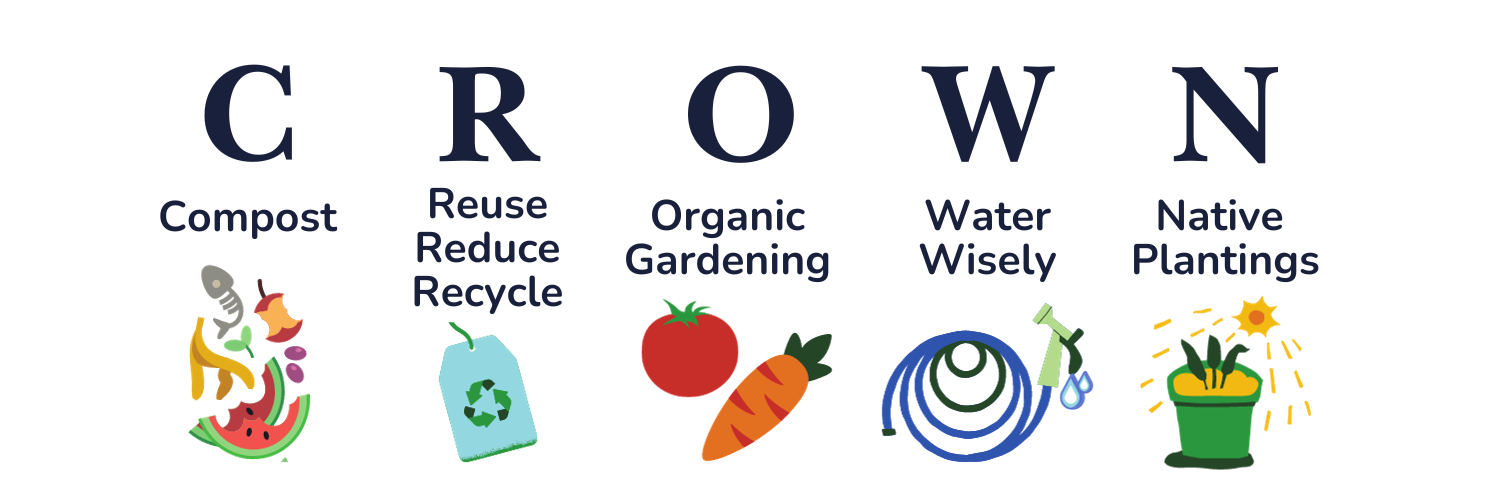
ReWild promotes five practices that are key to sustainability, easily memorable as CROWN. See the downloadable pdf.
Compost: In our kitchens and yards, we produce lots of organic waste. This can be turned into rich soil that helps the environment by storing carbon and supporting underground habitats. Soil is the foundation of life. We use methods such as composting, Vermiculture (worm farming), and Bokashi fermentation to transform yard and food scraps into valuable soil food.
Reduce/Reuse/Recycle: Sustainable gardening should not become yet another excuse for buying stuff we don’t really need. Planting perennials reduces the carbon footprint associated with annual plants purchased from box stores each year. Our yards and kitchens produce a steady stream of organic and plastic waste that should be reduced and recycled with creative “second uses” for things that would otherwise be junked.
Organic Gardening: We also believe that locally grown healthy food enhances our health and our connection to the land. We encourage residents to grow food alongside their native plants that attract pollinators and use composted yard waste to mulch and fertilize gardens. We need to stop spraying chemicals that hurt pollinators and devastate the ecosystem. ReWild has also created strong partnerships with local organizations that focus on issues of food security and sustainability to help mitigate hunger in our community.
Water Wisely: Long Island’s aquifers, streams and ocean waters need to be protected from pollution and recharged as part of the water cycle. The use of rain barrels, bioswales, rain gardens and smart irrigation systems, coupled with native plantings, provide an feasible pathway towards landscaping that protects rather than degrades our waters.
Native Plantings: We work to introduce native plant based gardens in public and private spaces, transforming them into thriving micro-habitats for a variety of insects, bees, birds and butterflies. In addition, our mission is to educate the public at large the value of ReWilding, as well as to advocate for change in community practices and regulations. We seek to achieve the benefits of conserving water, using fewer chemicals & pesticides, as well as bringing more bees/birds/butterflies to our neighborhoods.
Just a few committed people can increase awareness and encourage environmental repair and restoration. We're focused on evolving the cultural mindset from valuing perfectly manicured, sterile spaces to embracing practices that support life and attract pollinators.
Rewild also emphasizes the importance of collaborating with political leaders to improve laws that protect our environment. This effort is rooted in our fundamental connection to the Earth.