ReWild / North Shore 2026
Summer Program to Fight Hunger & Climate Change
Application Closed! See you next year
We will be welcoming new Summer Program Interns and Volunteers in 2026 to help enhance biodiversity, climate resilience and food security. You will learn:
Composting & recycling
Identifying native & invasive plants
Advocacy and outreach
Gardening for pollinators with native plants
Organic farming to benefit food-insecure community members
Oyster & bioswale projects to benefit our waters
Program locations
The 2025 Summer program was held in and around the Cow Neck peninsula.
The 2026 Program will expand to locations around Huntington as well. This is reflected in the Map below.
Please ensure that you can get to the following work locations which are in active consideration for the 2026 Summer Program. Remember, you get to choose which locations you will work at after the training week. Refer to the map for details.
Our Program Partners
-
The Baxter's Pond Foundation is a 501(c)3 non-profit organization whose mission is to assist Nassau County in maintaining, beautifying and improving Baxter’s Pond and the area immediately surrounding it in the Barbara Johnson Park and Preserve.
We will be beautifying and improving the ecological value of the pond and surrounding park through the planting of native plants, removal of invasive species, and other environmental education opportunities.
-
Bethpage State Park is actively restoring and maintaining 9 native pollinator gardens throughout the park.
Students activities include: invasive species removal, garden maintenance, and native plant installation, with efforts focused on managing mugwort and preparing sites for native habitat restoration.
-
The Coalition to Save Hempstead Harbor (CSHH) is restoring local shellfish populations through their harbor-wide oyster gardening program.
Help raise baby oysters that will be released in Hempstead Harbor to support marine life and clean our waterways. Filtering bacteria and nutrients as it goes, an adult oyster can filter up to 50 gallons of water per day. Garden oysters with us to benefit water quality on Long Island and protect our local environment.
-
Located within the longest stretch of pitch pine–scrub oak barrens on Long Island, Edgewood is an ecological powerhouse that needs our help. Support the highly diverse pollinator and plant communities by helping to maintain and remove invasive species from this community garden. Learn more about the site.
-
Monarchs Matter: Learn about the conservation status of monarch butterflies through awareness and hands-on experience. We will be rearing and tagging monarch butterflies to contribute to research on their migration while discussing threats to their success and ways to move forward. This program will be held in 4-week cohort at Edgewood Oak Brush Plains Preserve for the month of September.
-
Gateway Community Garden in Huntington Station is a large community-run organic garden where local residents grow their own fruits and vegetables. It is one of the biggest community gardens on Long Island, with over 100 raised planting beds. Learn to plant, grow and harvest food. All food harvested will be donated to the local food bank and soup kitchen.Other than growing produce, students will learn about invasive species located within the garden and some mechanical methods for control of them and dispose of them.
-
The PAR Garden is located right behind the Adult Activities Center building. Learn to plant, grow and harvest food on the 18 raised beds that are regularly maintained by Plant A Row For the Hungry, Port Washington. All vegetables we grow will be donated to a food pantry.
-
The PAR Garden is located on the grounds of the Helen Keller Center, down the drive as indicated on the map. Learn to plant, grow and harvest food. All vegetables we grow will be donated to a food pantry.
-
The Port Washington Estate Association is rewilding their Traffic Islands on Richards Rd! This experimental program aims to put native plantings right in the public eye, in areas that are traditionally tough to water, weed and maintain. Summer Students will be working with adult supervision to plant natives and water/weed them through the season.
-
The REACH Oyster Reef Project in Huntington is a community-based environmental program that grows and restores oysters in local waters. REACH focuses on raising young oysters (“spat-on-shell”) and placing them into the harbor to rebuild natural oyster reefs. The goal is to improve water quality, restore marine habitats, and support local aquaculture, since oysters naturally filter water and help ecosystems recover.
Volunteers will work on the nursery docks to clean and monitor the growing oysters. The program runs at two locations: Gold Star Battalion Beach in Huntington or Cow Harbor Park Dock in Northport Village. We meet every Saturday 9-11am, alternating between the two locations.
-
Native plant gardening: Learn to plant, grow and harvest food, compost yard, and kitchen waste, as well as rewilding and sustainable landscaping at this location. This is the homebase of ReWild and accepts adults and youth volunteers each Saturday between 9 and 11 AM.
-
Monarchs Matter: Learn about the conservation status of monarch butterflies through awareness and hands-on experience. We will be rearing and tagging monarch butterflies to contribute to research on their migration while discussing threats to their success and ways to move forward. This program will be held in 4-week cohorts at Dodge for the month of September.
-
Roots & Reflections
-
Groups will be performing woodland and beach maintenance on this beautiful preserve by the Long Island Sound.
-
Learn how to survey local wildlife at Sands Point Preserve through this 3-week opportunity. We will be working to track wildlife biodiversity, population.
-
The Sands Willets House is a farmhouse from the 18th Century that the Cow Neck Peninsula Historical Society runs. Learn rewilding, botanical art, and sustainable landscaping at this historic location.
-
Monarchs Matter: Learn about the conservation status of monarch butterflies through awareness and hands-on experience. We will be rearing and tagging monarch butterflies to contribute to research on their migration while discussing threats to their success and ways to move forward. This program will be held in 4-week cohorts at Seraphim Farms for the months of July and August.
-
Born to ReWild: Storytelling through Film is a 4-lesson program that will teach students to find their inner ReWilder by connecting with the natural world through observation, storytelling, and cultivating awe. The program is driven by a group project to create video-essays that connect to your personal experiences, and convey a message about the environment. We will learn how to film and edit, and how to use the medium of film to create meaningful change.
-
The Garden Ministry at the Sisters of St. Joseph is a working garden and living classroom dedicated to sustainability, ecological restoration, and environmental education. Through native plantings, organic growing practices, and conservation based stewardship, the ministry supports pollinators, wildlife, and the health of the local ecosystem and community, complimenting the Sisters’ commitment to caring for the Earth.
Volunteers and visitors gain hands-on experience in sustainable gardening and ecological restoration, learning best management practices while building environmental stewardship skills, connecting with nature, and serving the community.
-
The SMLI maintains six pollinator-friendly native plant gardens, of which 2 are rain gardens.
Work will involve removing non-native plant species in the six pollinator-friendly native plant gardens, including rain gardens at the Science Museum of Long Island. We may plant some native perennials as well, and birdwatching is an option at the end of the session and observe the importance of native plants for wildlife on Long Island.
-
Help restore the existing woodland areas at the Science Museum of Long Island. We will work on maintaining three replanted woodland areas, next to the parking lot shown on the map and learn to identify native and non-native invasive plants, and observe the importance of native plants for wildlife on Long Island. Working at the compost site is also involved.
Interns will rotate into 1/2 hour sessions at the Community Compost where they'll learn all about composting their kitchen food scraps at home/backyard or as a community. They will maintain the compost piles and learn the amazing benefits - just by changing a household routine - this simple activity has on the planet's ecosystem.
-
The Sunken Meadow pollinator garden and marsh restoration project helps restore native habitat for bees, butterflies, birds, and other wildlife along Long Island’s north shore. Volunteers will be removing invasive plants, planting native pollinator species, and improving wetland conditions to support biodiversity, strengthen the shoreline, and protect the ecosystem from erosion and sea-level rise.
Note: Tolls are waived for volunteers with the Nature Center.
-
Learn how to rear oysters in the Town of Port Washington. These oysters will help to keep our harbor clean and our wildlife healthy.
-
Create a welcoming environment in the forest by maintaining walking trails, creating signage, and removing introduced species. Time spent in the pollinator garden will be based on the gardens’ needs for cutting back plants, transplanting, and weeding.
-
Learn to make delicious smoothies and salads, to enjoy while creating nature journals through writing and artwork. Please bring a bagged lunch.
-
The Citizen science Water Quality Testing Project by the Transition Town of Port Washington will take place at 3 locations on the Port Washington Peninsula. These locations are Baxter’s Pond, Mill Pond and Leeds Pond.
Please see the map above for pickup and drop off points for various locations.
Our Schedule
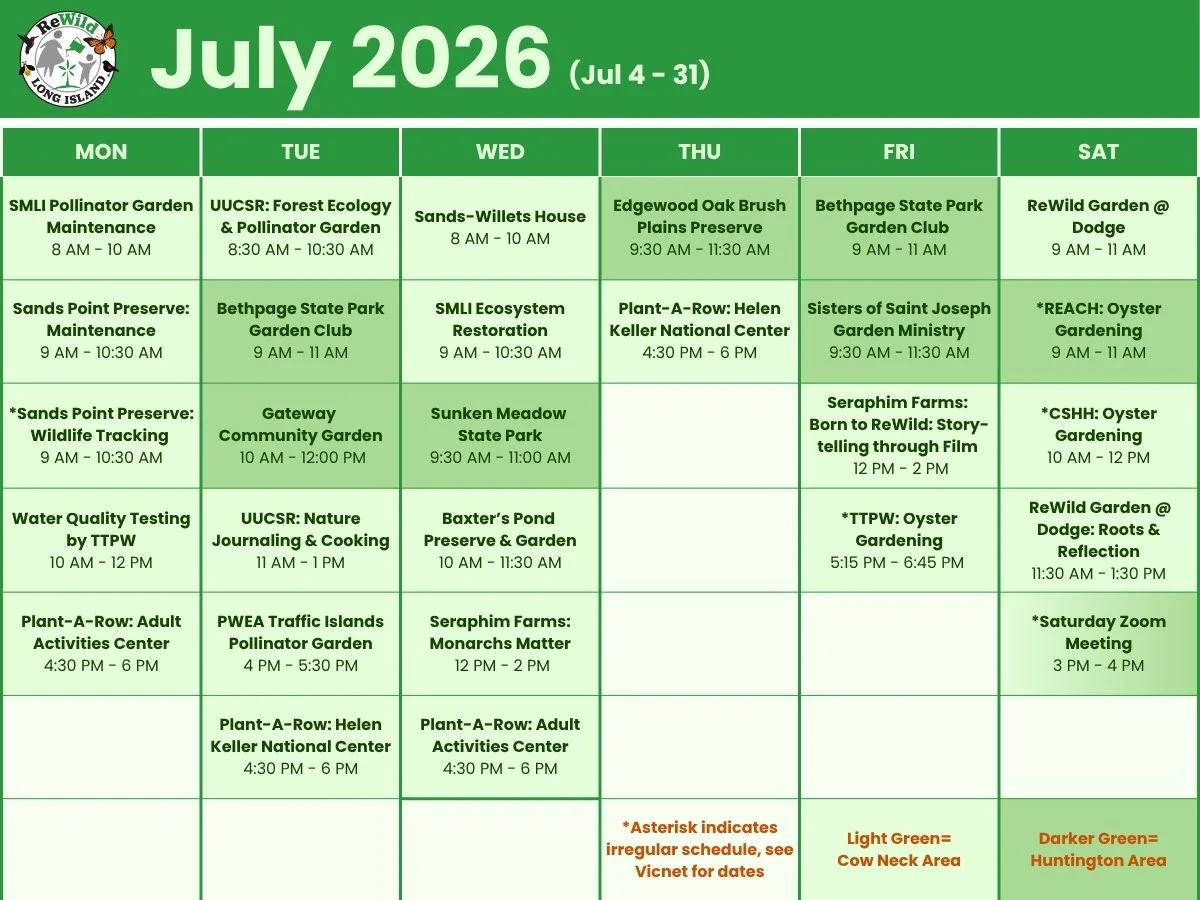
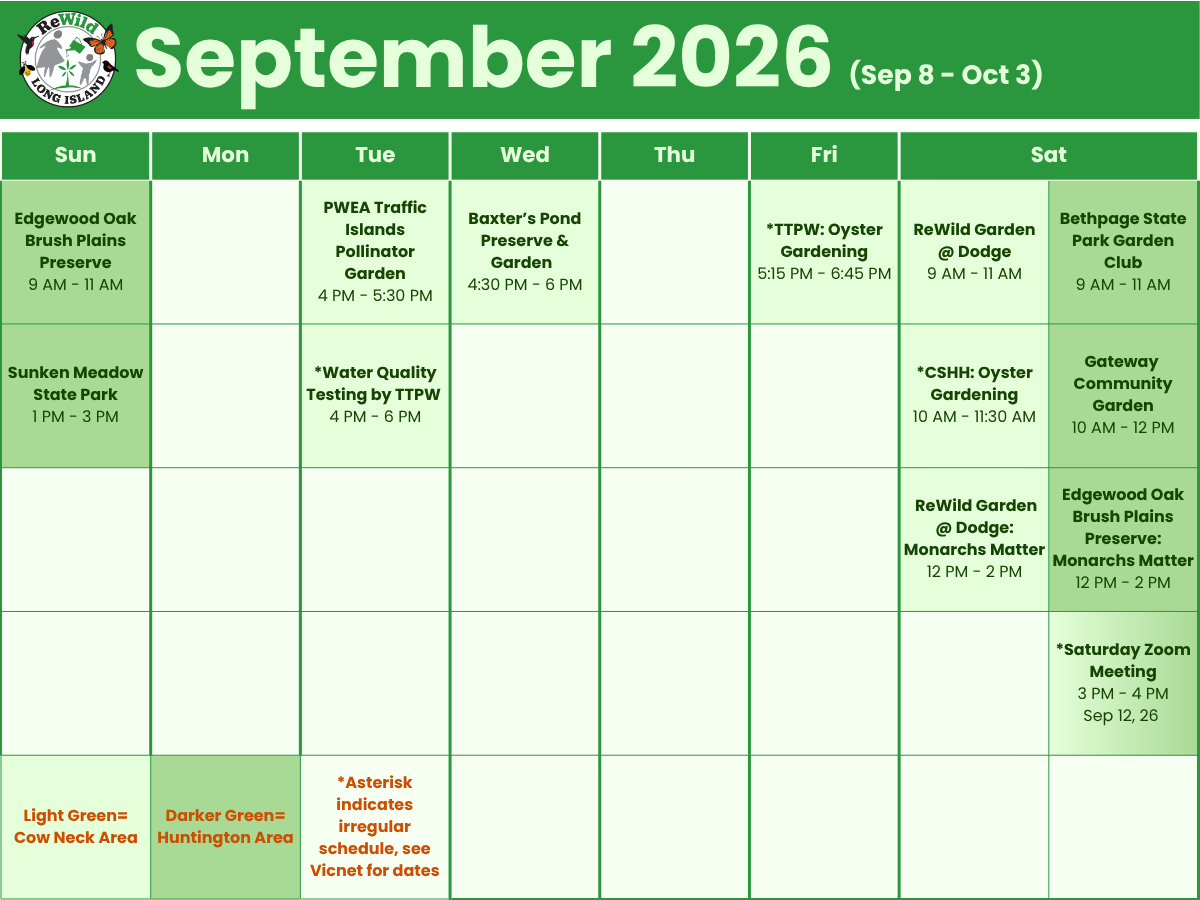
The 2026 summer program schedule is out now. There are 4 different schedules corresponding to different phases of the program: Training Week, July, August, and Fall. Some programs must be signed up for for the entire month. Check the program description for more details.
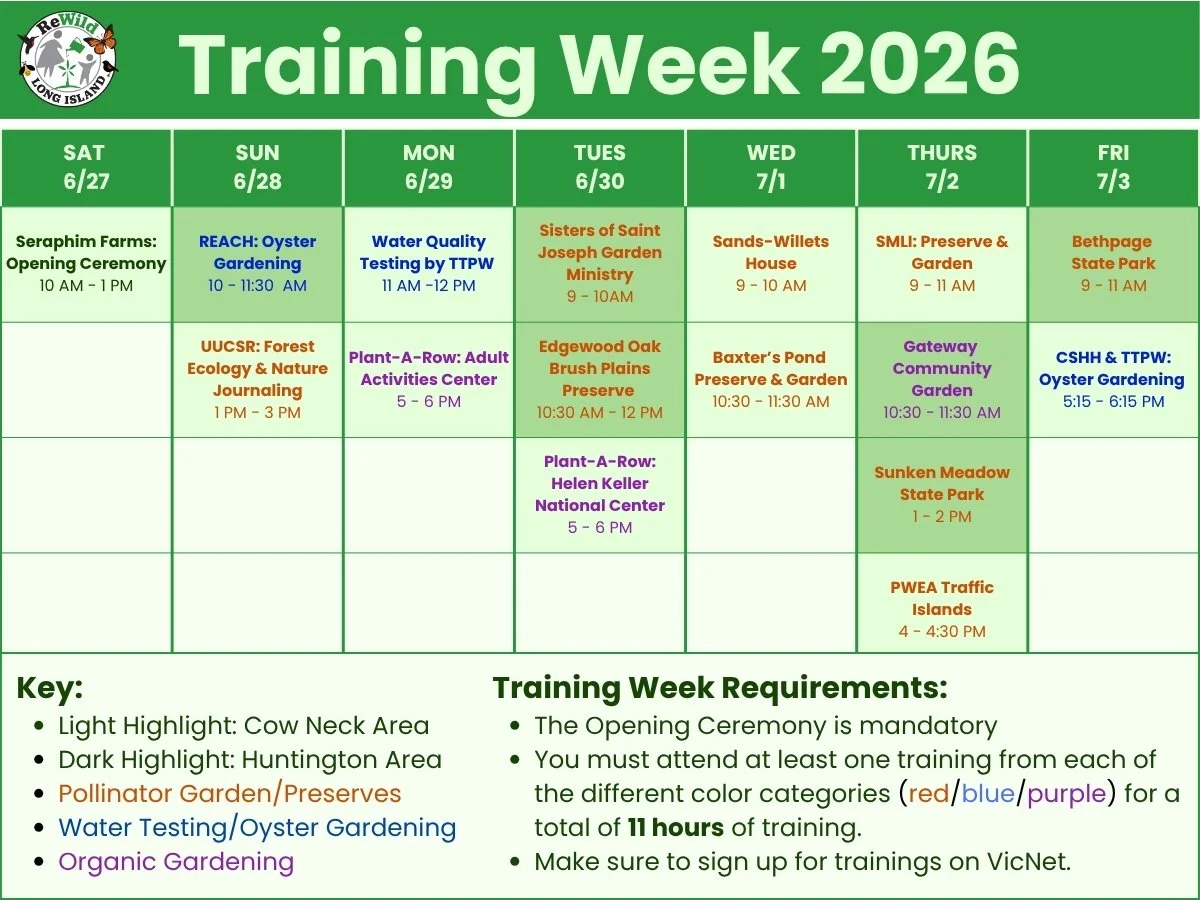
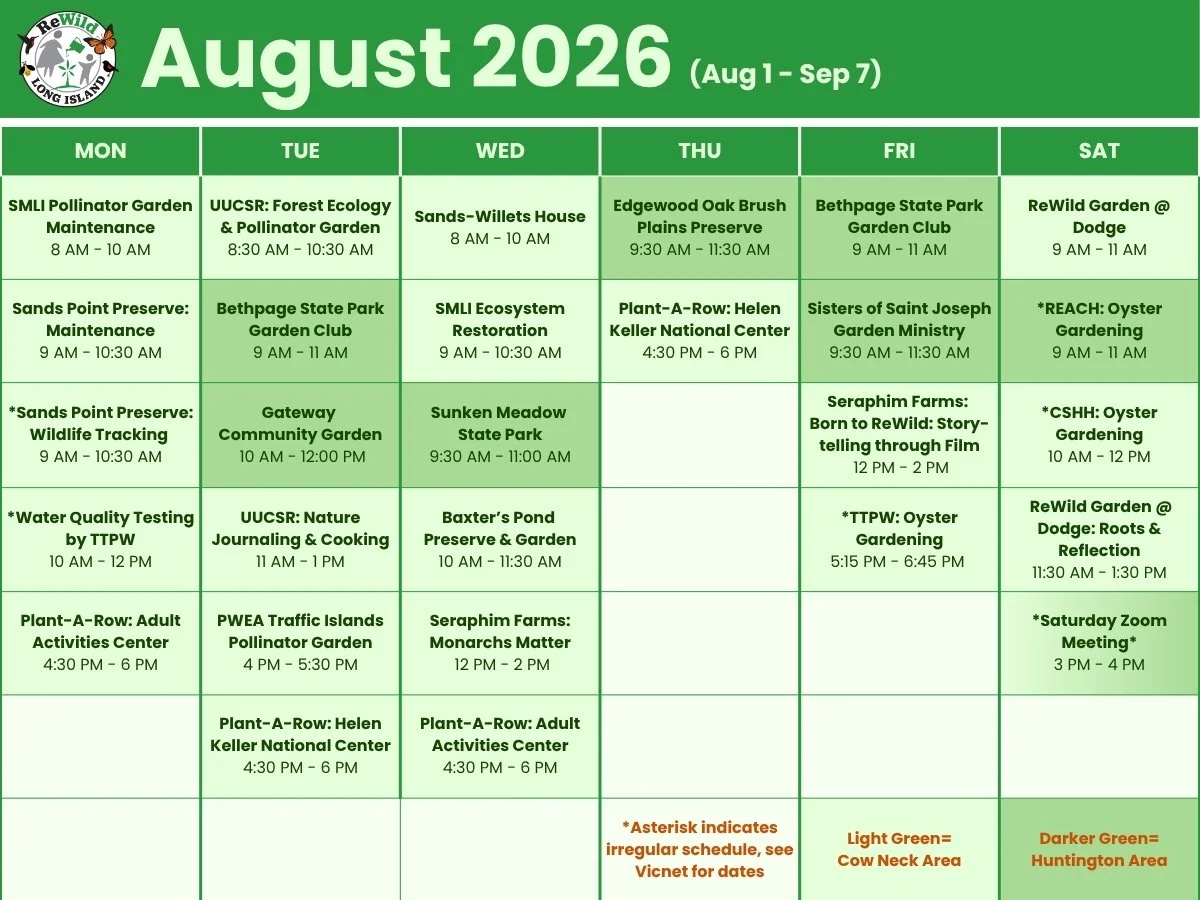
Training Week : The training week will go from June 27 to July 3. Please see the calendar for attendance requirements. These sessions will introduce you to various locations and give you a sense of whether you will enjoy those activities, or perhaps if you should do more of something else.
Weekly Online Hour-long Meetings: All students are expected to attend the Saturday Zoom sessions that go from July 4 through to Sep 26. We will make some of the sessions optional (eg. July 4) but otherwise, please note that you must be online with us from 3 pm to 4 pm on Saturdays.
Summer Session: The summer session will go from July 4 through Sep 7 (Labor Day). During this time activities will be scheduled during the day on weekdays and weekends. You should have a wide selection of activities during this period.
Fall Session: This goes from Sep 8 to October 3, and activities will be scheduled after school hours and during weekends.
Upcoming Events
The Organizing Team
The Summer Program is organized by a committee of adult and youth volunteers, who have worked hard to make the program possible. The organizing team consists of
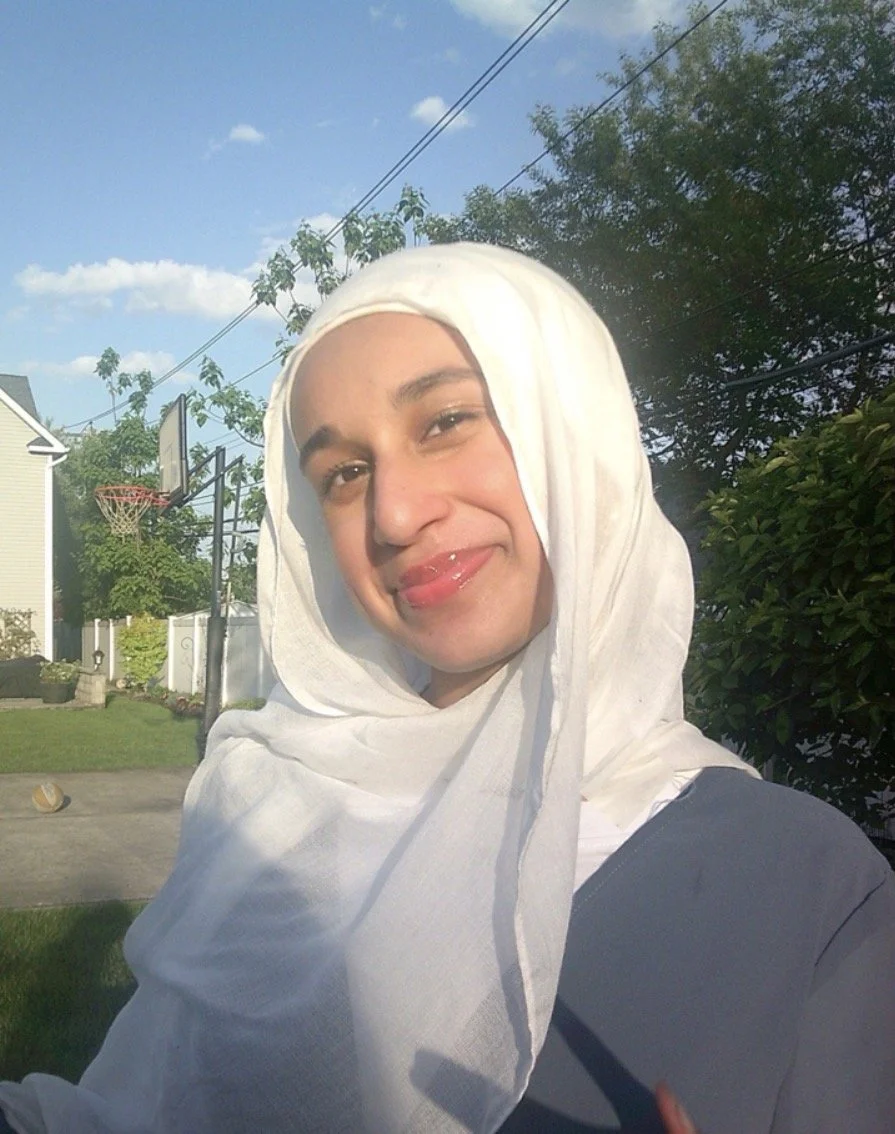
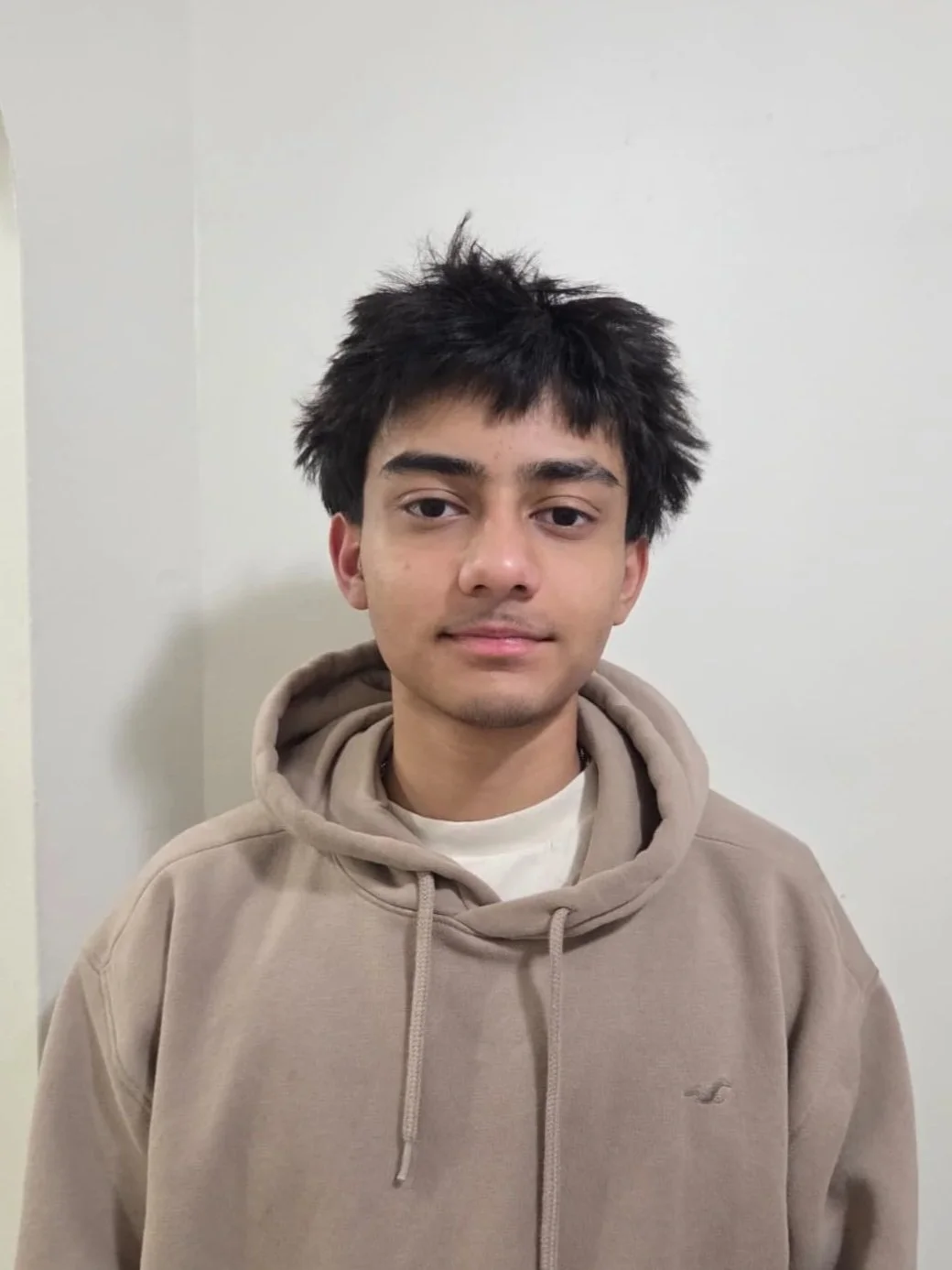
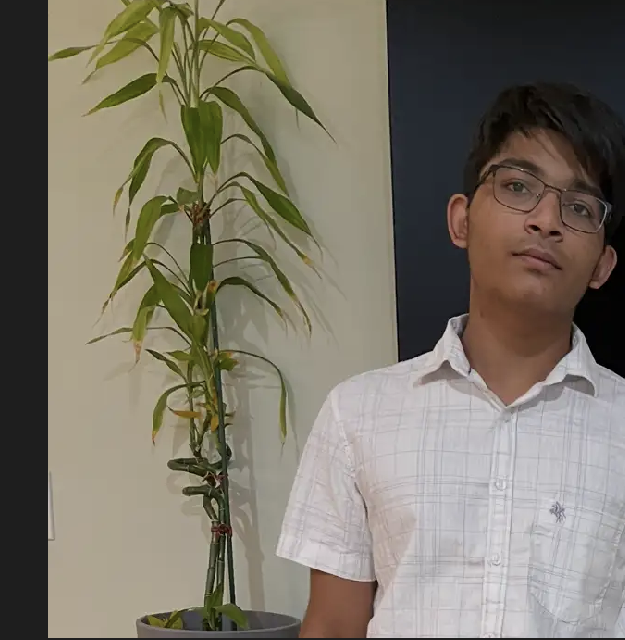
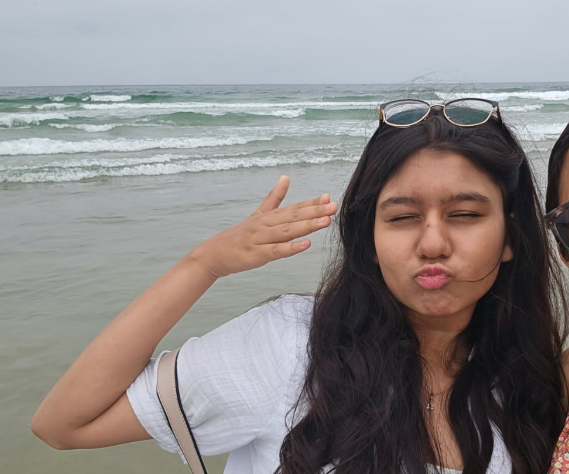
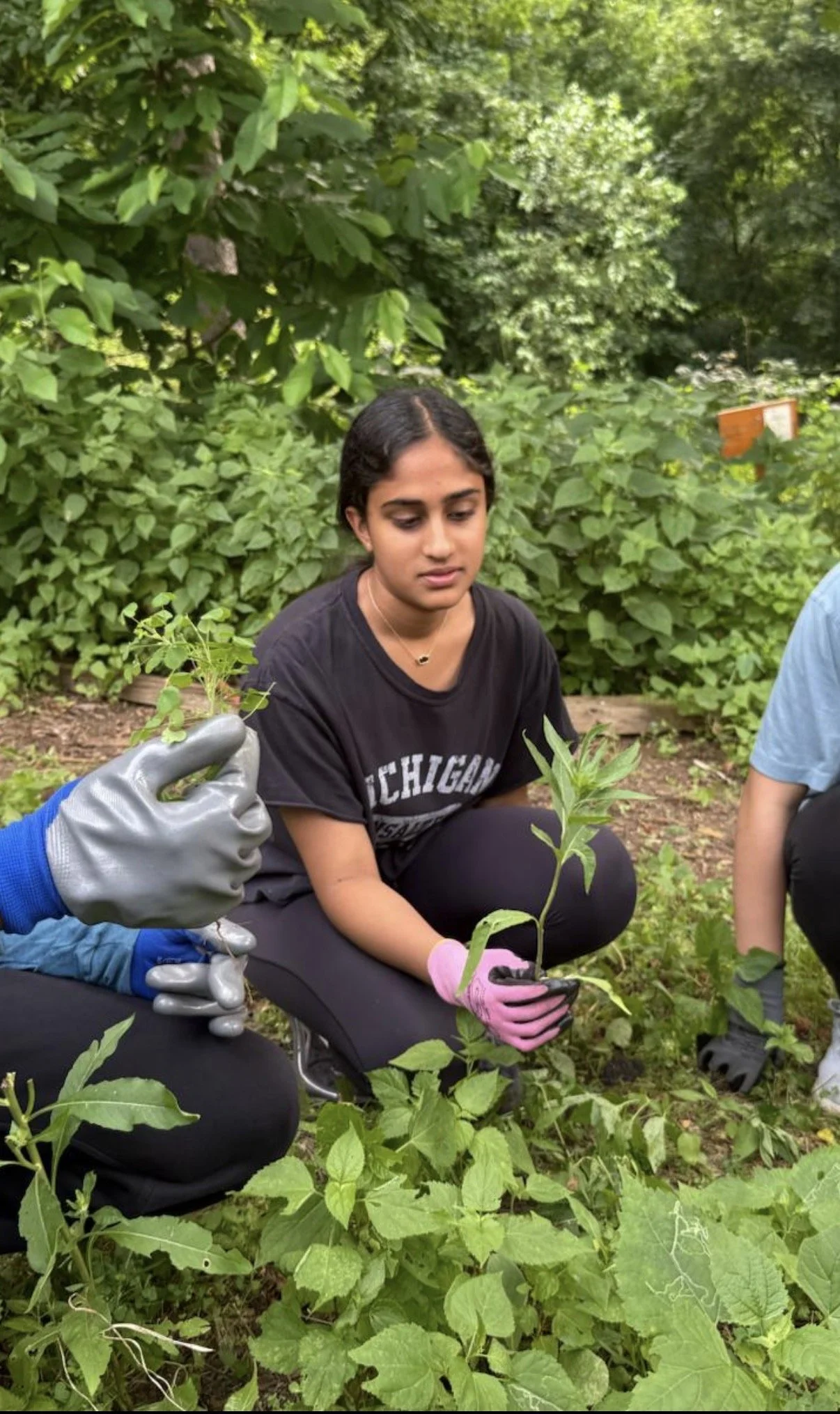
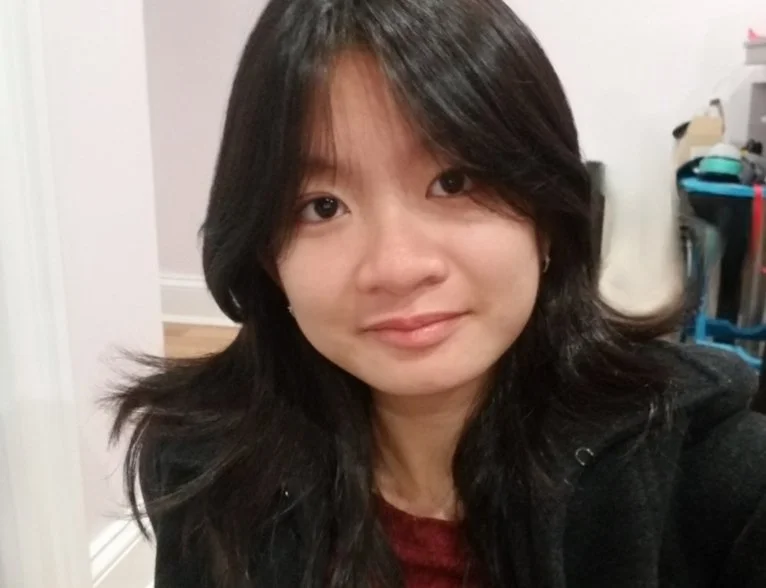
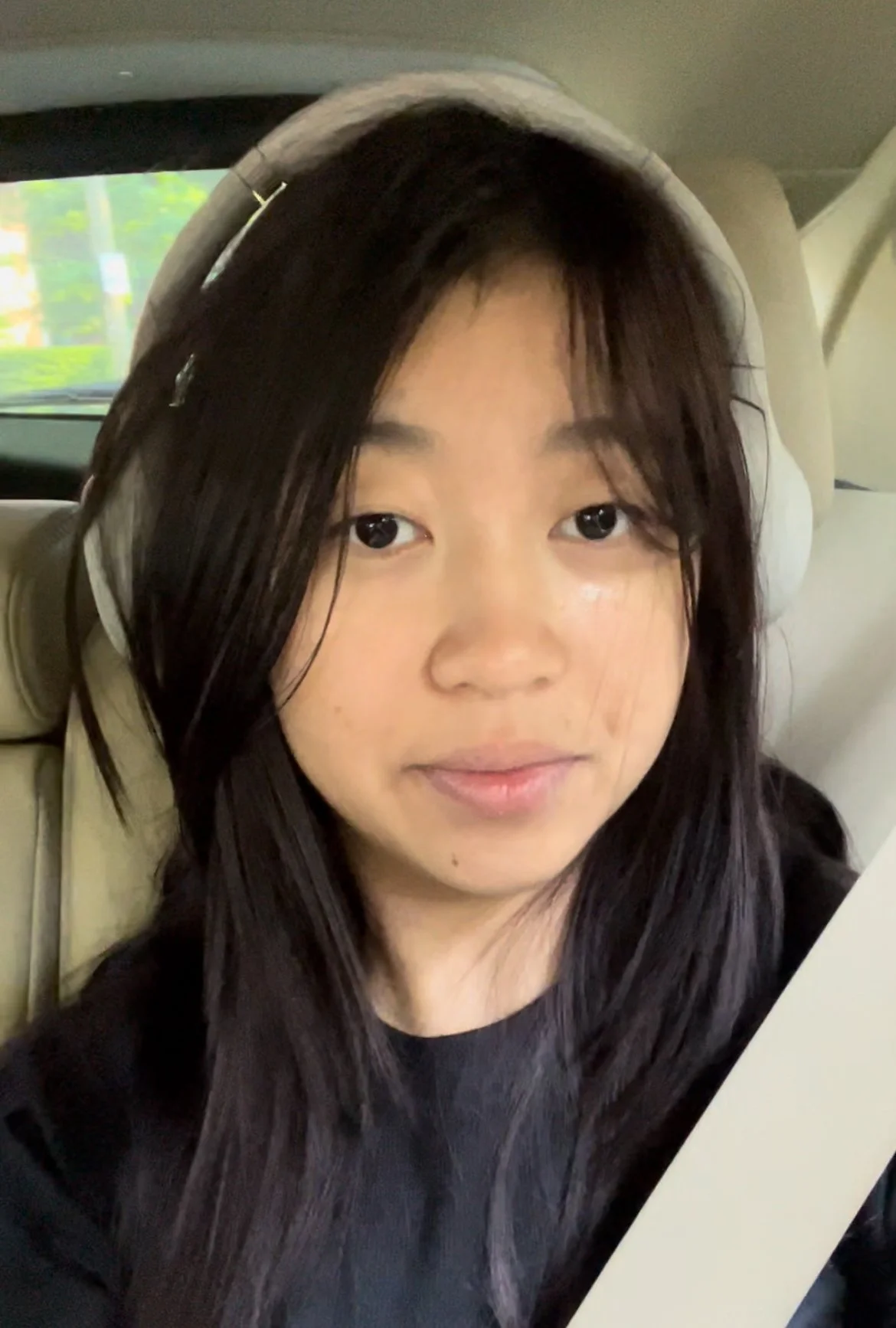
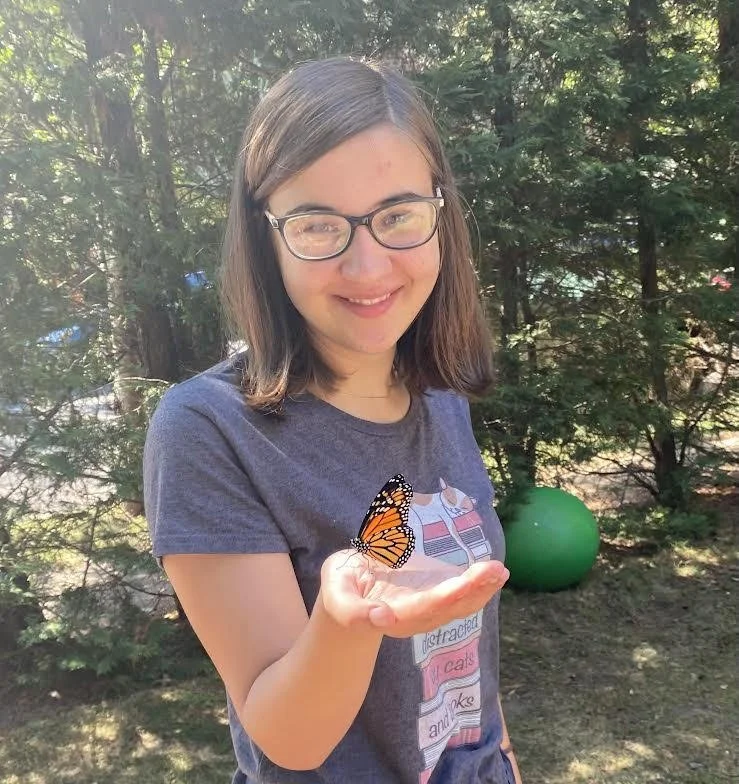
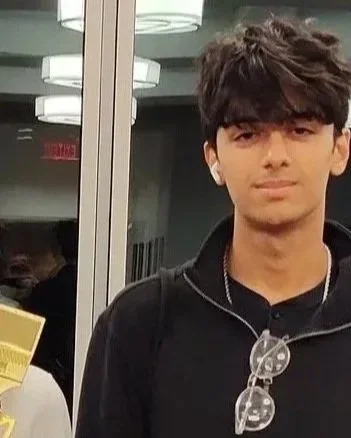
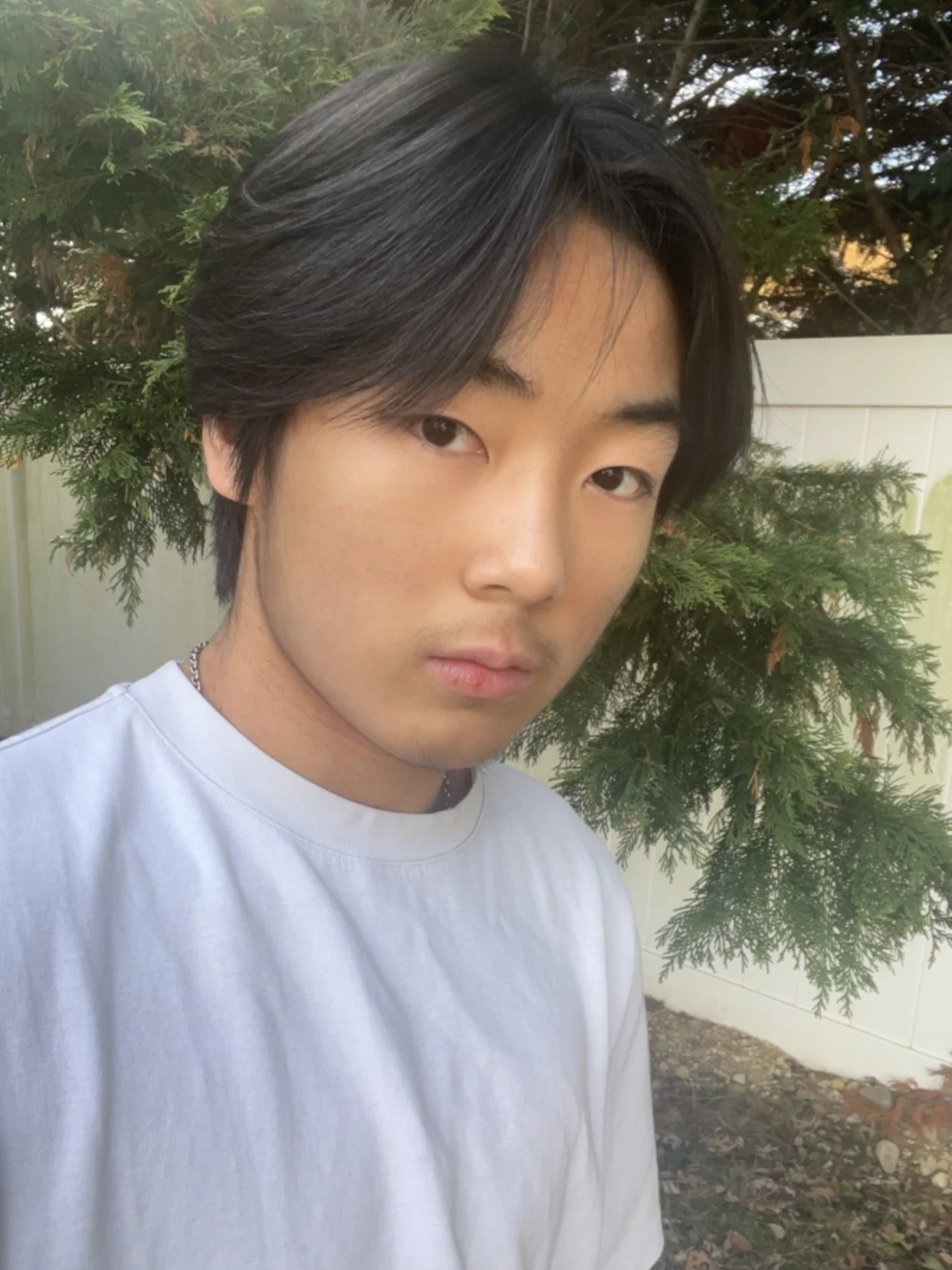
Youth Organizers : Each year, we recruit highly motivated students from the previous year’s summer program to help organize the current program. These youth organizers are trained in leadership skills. They work from January through June creating the schedule, preparing publicity, interviewing incoming students and taking responsibility for mentoring at various locations.
Rewild Long Island Summer Program Committee Members: Adult organizers help to motivate and guide our youth organizers, while working side by side to make each year’s program successful.
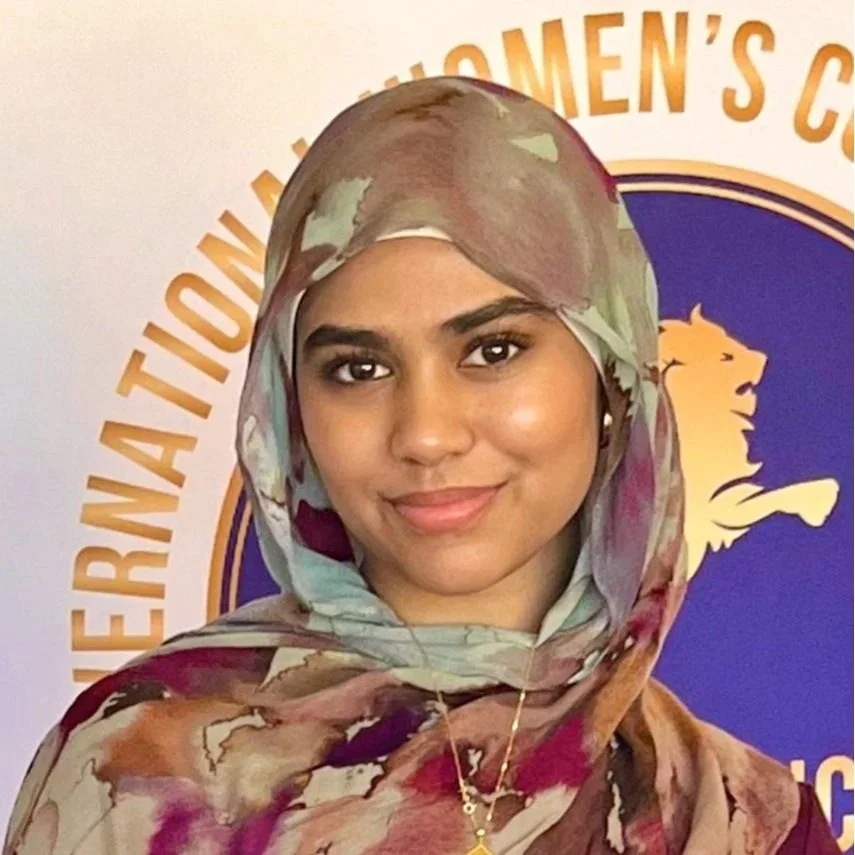
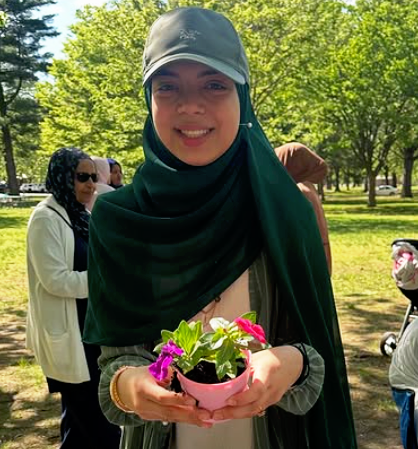
Click on the students’ photos to get to know more about them!

Questions?
Check out the FAQ first. If you still need help, contact us at northshoresummer-leads@rewildlongisland.org.
Summer Program Questions Form
Special Thanks to our Sponsors
Click here to return to the Summer Program page.